
Shamonda Virus: 1st Case, 3 Risks

Shamonda Virus: 1st Case, 3 Risks has become a major health news topic after France reported the first documented human infection in October 2026. The virus mainly affects animals, including cattle, sheep, goats and horses. The World Health Organization (WHO) is working with French authorities to understand the case and assess any possible health risks.
French health authorities reported that the patient had a severely weakened immune system and was being treated for a serious illness. The patient died in early October. Investigations are continuing to determine how the infection occurred and the role the virus played in the patient’s death.
Shamonda Virus: Latest Update from France
France reported the first documented human disease case caused by Shamonda Virus in October 2026. The WHO published information about the case on 22 October 2026. French health authorities were notified of the infection on 7 October.
The patient was receiving treatment for a serious illness and had a severely weakened immune system. The patient later died. Authorities are investigating the infection and whether the virus caused or contributed to the death.
According to French public health authorities, no human-to-human transmission or health risk to the general population has been identified so far. The investigation is still ongoing, so further findings may provide more information.
Read more national news on PM Modi Exposes 3 India Threats.
What Is Shamonda Virus?
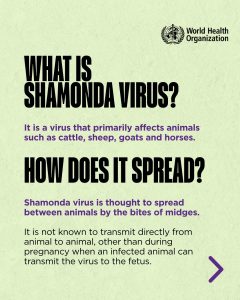
Shamonda Virus is a virus in the Orthobunyavirus genus and Peribunyaviridae family. It is mainly associated with infections in animals. The virus was first isolated from cattle in Nigeria in 1965.
It has been reported in parts of Africa and Japan. In 2026, it was also detected in livestock in Europe. The first documented human infection was reported in France in October 2026.
The virus is thought to spread between animals through the bites of infected Culicoides midges. These are small, biting insects. The exact route of infection in the French human case has not been confirmed.
For more news, visit our report on UNESCO Adds 3 Indian Sites.
Which Animals Can Be Affected by Shamonda Virus?
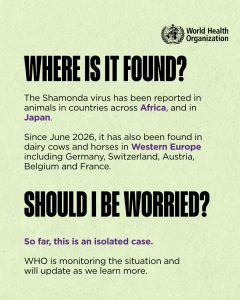
Shamonda Virus mainly affects livestock. The animals identified by the WHO include cattle, sheep, goats and horses. The virus has also been detected in alpacas.
In animals, infection may cause health problems. French public health information lists symptoms such as fever, diarrhoea and reduced milk production in ruminants. Reproductive problems have also been reported in infected livestock.
French authorities reported that, as of 20 October 2026, the virus had been detected in cattle in 52 departments of mainland France, in sheep in two departments, and in one horse in the Hérault department.
These figures describe animal detections in France. They do not represent human infections.
For another public-interest update, read Odisha Police Recruitment 2026.
Shamonda Virus: What Are the Possible Human Health Risks?
The first documented human case has led to further investigation. However, one case does not establish that Shamonda Virus can spread easily between people.
The patient had a severely weakened immune system and was already being treated for a serious illness. French authorities are investigating how the infection occurred and whether the virus caused or contributed to the patient’s death.
The leading hypothesis is that the patient may have been infected through the bite of an infected midge. Investigators are examining this possibility and other potential sources of infection.
At present, there is no evidence of human-to-human transmission or an identified health risk to the general public, according to French health authorities. Information about human infection remains limited because this is the first documented case.
WHO Monitoring and Investigation
The World Health Organization is in contact with French authorities to gather more information about the case. The European Centre for Disease Prevention and Control (ECDC) is also monitoring developments.
Investigations involve experts in human health, animal health and environmental health. They are examining possible routes of infection and comparing the virus detected in the patient with strains found in animals.
Authorities are also monitoring the virus in livestock and working to improve detection methods. These steps can help experts understand the case and assess whether the situation changes.
Read another major update on Kashi Tamil Sangamam 5.0: 3 Big Updates.
Shamonda Virus: Key Facts at a Glance
| Key Detail | Reported Information |
|---|---|
| Virus | Shamonda Virus |
| First documented human case | France, October 2026 |
| WHO update | 22 October 2026 |
| Main animal hosts | Cattle, sheep, goats and horses |
| Human cases documented | One reported case |
| Human-to-human transmission | No evidence identified so far |
| Public health risk | No risk identified so far by French authorities |
Shamonda Virus: Reported Human Case Chart
Documented Human Cases
This visual represents the one documented human case described in official reports. It is not a forecast or a measure of future risk.
Animals Associated with the Virus
Sheep
Goats
Horses
Alpacas
These are animal types associated with the virus, not a comparison of infection numbers.
What Should People Know About Shamonda Virus?
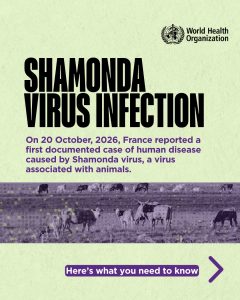
People should follow verified updates from WHO and French health authorities. The reported human case does not automatically mean that the virus is spreading widely among people.
Livestock owners should follow advice from local veterinary authorities if they have concerns about animal health. Authorities are continuing to monitor animal infections and investigate the human case.
Readers should avoid sharing unverified claims about human transmission or a wider outbreak. Official updates are the best source for reliable information as investigations continue.
For sports coverage, read India vs New Zealand 2026: Big T20I Battle.
More News on DeshPrism
Odisha Police Recruitment 2026
Kashi Tamil Sangamam 5.0: 3 Big Updates
India vs New Zealand 2026: Big T20I Battle
Official External News Sources
- WHO: Shamonda Virus Questions and Answers
- Santé publique France: First Human Case Update
- ECDC: First Reported Human Infection
- French Ministry of Health: Official Statement
Conclusion
France reported the first documented human disease case caused by Shamonda Virus in October 2026. The virus mainly affects animals, including cattle, sheep, goats and horses.
WHO and French authorities are monitoring the situation. No human-to-human transmission or health risk to the general public has been identified so far. Investigations are continuing to understand how the infection occurred and whether the virus contributed to the patient’s death.
DeshPrism will continue to follow verified updates from official sources.