
ISRO Space Programme: 2029 Boost
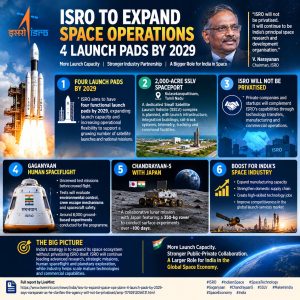
ISRO Space Programme: 2029 Boost highlights India’s reported plans to expand launch infrastructure, strengthen private-sector participation and advance major missions, including Gaganyaan and Chandrayaan-5. The roadmap could support more frequent launches and help India expand its role in the global space industry.
ISRO Chairman V. Narayanan has outlined plans involving launch facilities, small satellite launches, human spaceflight preparations and lunar exploration. The proposed expansion is intended to support India’s growing space ambitions.
ISRO Space Programme: Four Functional Launch Pads by 2029
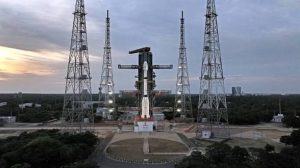
A major part of the ISRO Space Programme: 2029 Boost is the reported target of having four functional launch pads by 2029. Additional launch capacity could help India manage a greater number of satellite missions and respond to growing demand for launch services.
Launch pads provide the infrastructure needed to prepare, test and launch rockets. Having more operational capacity could improve scheduling flexibility and reduce pressure on existing facilities.
However, the final timeline will depend on project progress, infrastructure readiness, technical reviews and other operational requirements. Readers should consult official ISRO announcements for confirmed milestones.
New SSLV Spaceport Proposed at Kulasekarapattinam
Another important development is the proposed launch infrastructure at Kulasekarapattinam in Tamil Nadu. The site is being developed to support the Small Satellite Launch Vehicle (SSLV), which is designed to launch smaller satellites.
Reports have described a large land area for the proposed spaceport. The facility is expected to support dedicated small-satellite launches and could provide operational advantages for missions travelling towards suitable orbital paths.
The SSLV is intended to offer a launch option for smaller payloads. Demand for Earth-observation, communication and other small satellites has increased the importance of flexible launch services.
For the latest project details, consult the official ISRO website and its published updates on the Kulasekarapattinam launch complex.
Gaganyaan Mission: Human Spaceflight Preparations
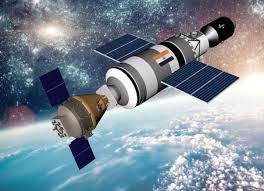
The ISRO Space Programme: 2029 Boost also comes as India continues preparing for the Gaganyaan human spaceflight programme. The mission aims to demonstrate India’s capability to send Indian astronauts into space and return them safely to Earth.
Before a crewed flight, the programme requires extensive testing and safety checks. These include spacecraft systems, environmental control and life-support systems, crew escape arrangements, ground infrastructure and mission operations.
Uncrewed test flights are an important step in checking the performance of the spacecraft and associated systems before astronauts are sent into space. Engineers use test results to identify issues and improve mission readiness.
Reports have also highlighted a large number of ground-based experiments and simulations connected with mission preparation. Such work can help validate systems under different conditions.
Gaganyaan remains a technically demanding programme. Its milestones and schedule should be followed through official ISRO announcements rather than assumptions about launch dates.
Chandrayaan-5: India-Japan Lunar Exploration
India is also pursuing further lunar exploration following the achievements of its earlier Chandrayaan missions. The reported Chandrayaan-5 concept involves cooperation between India and Japan.
Reports have described a rover weighing approximately 350 kilograms and plans for extended scientific activity on the lunar surface. The mission’s final configuration, landing arrangements, science objectives and schedule are subject to official confirmation.
A future lunar rover could help scientists study the Moon’s surface and gather information relevant to understanding its geology and environment. International cooperation can also combine technical expertise and mission capabilities.
Readers can follow India’s lunar exploration programme through the ISRO official website for mission updates and confirmed announcements.
ISRO and Private Companies: Different Roles
Another important aspect of the ISRO Space Programme: 2029 Boost is the growing role of private companies in India’s space sector.
India’s space ecosystem includes government institutions, startups and established companies. Private firms can contribute to satellite manufacturing, launch vehicles, components, software, data services and other technologies.
ISRO’s research, development and mission experience can complement the capabilities of commercial companies. Greater participation from industry may support innovation, create skilled jobs and expand the range of services available to customers.
Private-sector participation does not automatically mean that ISRO itself is being privatised. The roles of ISRO, government bodies and commercial entities are distinct, and readers should rely on official policy statements when evaluating claims about ownership or institutional changes.
India’s Space Programme at a Glance
The following graphic summarises the main themes discussed in reports about the programme. It is a topic overview, not a chart of measured performance or completed milestones.
Key Areas of Space Development
1. Launch Infrastructure
Reported target: four functional launch pads by 2029.
2. Small Satellite Launches
Focus: SSLV capability and dedicated launch infrastructure.
3. Human Spaceflight
Focus: Gaganyaan testing, safety and mission readiness.
4. Lunar Exploration
Focus: future Chandrayaan missions and international cooperation.
Note: Bar lengths are illustrative only. They do not represent budgets, completion percentages or official performance measurements.
What Could the Expansion Mean for India?
If the proposed infrastructure and missions progress as planned, they could bring several potential benefits to India’s space sector.
More Opportunities for Satellite Launches
Additional launch capacity could help accommodate more missions and provide greater flexibility for satellite operators. The actual impact will depend on launch schedules, vehicle availability and customer demand.
Growth in Space Technology Jobs
Space infrastructure and spacecraft programmes require engineers, scientists, technicians, software specialists and manufacturing workers. A growing ecosystem could create opportunities for skilled professionals and suppliers.
Support for Private Space Businesses
Commercial firms may find opportunities in components, satellite systems, launch services and data applications. Stable policies, technical standards and access to suitable infrastructure will remain important for long-term growth.
Advancement in Scientific Research
Gaganyaan and future lunar missions could expand India’s experience in human spaceflight, spacecraft engineering and planetary science. Scientific outcomes will depend on successful testing, mission execution and the quality of data collected.
Challenges That Could Affect the Timeline
Large space projects require extensive testing, funding, coordination and safety reviews. Delays can occur when systems need further validation or infrastructure work takes longer than expected.
Human spaceflight programmes face particularly strict safety requirements. Lunar missions also involve complex engineering challenges, including landing, surface mobility, power management and communication.
For these reasons, targets and proposals should not be treated as completed achievements. Official announcements are the best way to confirm progress and updated schedules.
Official Sources and Further Reading
For reliable updates on India’s space programme, readers can consult official announcements and established news organisations.
- ISRO — Indian Space Research Organisation
- Press Information Bureau (PIB)
- Akashvani / News on AIR
- Hindustan Times
- Mint
- Rediff News
Readers can also explore more coverage on DeshPrism and read our related report on India’s economic outlook.
Conclusion
The ISRO Space Programme: 2029 Boost reflects India’s wider ambition to expand launch infrastructure, prepare for human spaceflight, develop small-satellite launch services and pursue further lunar exploration.
The proposed expansion could create opportunities for research, industry and commercial launch services. However, the final outcomes will depend on technical progress, funding, testing and official mission schedules. Confirmed updates from ISRO and government sources will be essential for tracking each milestone.
Editorial note: Targets, project descriptions and mission specifications can change. Verify each specific claim against the latest official announcement before publication.