
Delhi Air Pollution: AQI Hits 383
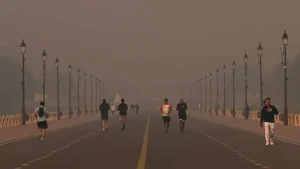
New Delhi: Delhi Air Pollution: AQI Hits 383 has become a major concern after Diwali celebrations. On Sunday morning, November 8, 2026, a thick layer of toxic smog covered several parts of the national capital. Delhi Air Pollution levels reached alarming heights as the overall Air Quality Index (AQI) touched 383, placing the city in the Very Poor category.
According to monitoring data, 24 out of 54 monitoring stations across Delhi recorded air quality in the Severe category. Firecracker emissions, unfavourable weather conditions and agricultural stubble burning contributed to the worsening Delhi Air Pollution situation.
Delhi Air Pollution: AQI Hits 383 After Diwali Celebrations
Delhi Air Pollution: AQI Hits 383 was the major highlight of the city’s air quality report on Sunday morning. The national capital witnessed a significant deterioration in air quality following Diwali celebrations.
Delhi Air Pollution continued to affect several neighbourhoods, with 24 out of 54 monitoring stations recording severe AQI levels. The thick smog reduced visibility and raised concerns among residents.
Delhi Air Pollution: AQI Hits 383 in Major Areas
Delhi Air Pollution: AQI Hits 383 was recorded as the overall reading, but several locations experienced even worse conditions. Jahangirpuri recorded an AQI of 450, while RK Puram reported 448.
These readings show how Delhi Air Pollution has affected different parts of the capital. Both locations entered the Severe category under the CPCB classification.
| Location | AQI | Category |
|---|---|---|
| Jahangirpuri | 450 | Severe |
| RK Puram | 448 | Severe |
| Delhi Overall | 383 | Very Poor |
Why Is Delhi Air Pollution Increasing?
Several factors are responsible for the rising pollution levels in Delhi. Firecracker emissions during Diwali have added more smoke and particulate matter to the atmosphere.
Stubble burning in neighbouring states, particularly Punjab and Haryana, has also increased concerns. Smoke from agricultural fields can travel towards Delhi and contribute to regional air pollution.
Weather conditions are another important factor. Low wind speeds and unfavourable atmospheric conditions can prevent pollutants from dispersing quickly, allowing polluted air to remain concentrated near the ground.
Delhi Air Pollution: AQI Hits 383 also highlights the role of weather conditions in worsening the city’s air quality. Low wind speeds can trap pollutants near the ground, making it difficult for the atmosphere to clear naturally.
Green Firecrackers Allowed During Specific Hours
Following Supreme Court directions, certified green firecrackers were permitted in Delhi-NCR during specific time windows.
- Morning: 6 AM to 7 AM
- Evening: 8 PM to 10 PM
The permitted schedule applied to November 7 and 8, while a complete restriction was scheduled to return from November 9. These restrictions aimed to limit additional emissions during the festival period.
Delhi AQI Forecast for November 8 and 9
The Air Quality Early Warning System warned that pollution levels could remain severe on November 8 and 9.
According to the forecast, the AQI could increase further during Sunday night and potentially reach approximately 406 by 4 AM on Monday, November 9.
Delhi Air Pollution: AQI Hits 383 could become an even bigger concern if the forecast materialises. An AQI of 406 would place the city in the Severe pollution category.
Understanding the AQI Categories
The Central Pollution Control Board (CPCB) classifies air quality into six categories. These categories help people understand the severity of Delhi Air Pollution and other air quality conditions across India.
| AQI Range | Air Quality |
|---|---|
| 0–50 | Good |
| 51–100 | Satisfactory |
| 101–200 | Moderate |
| 201–300 | Poor |
| 301–400 | Very Poor |
| 401–500 | Severe |
Delhi Air Pollution: AQI Hits 383 Raises Health Concerns
Delhi Air Pollution: AQI Hits 383 highlights the worsening environmental conditions in the capital. High pollution levels can create serious health concerns, particularly for children, older people and individuals with respiratory conditions.
Exposure to polluted air may cause breathing difficulties, throat irritation and other respiratory problems. Residents should follow official health advisories and avoid unnecessary outdoor exposure during periods of high pollution.
People should also check local AQI readings because pollution levels can vary significantly between different neighbourhoods.
What Happens Next?
Delhi Air Pollution remains a serious environmental concern after Diwali. The combination of firecracker emissions, vehicle pollution, construction dust, agricultural smoke and unfavourable weather conditions may continue to affect air quality.
Delhi Air Pollution: AQI Hits 383 has drawn attention to the urgent need for effective pollution-control measures. Monitoring the Delhi AQI regularly will be important in the coming days.
Frequently Asked Questions (FAQs)
1. What was Delhi’s AQI on November 8, 2026?
Delhi recorded an overall AQI of 383 on Sunday morning, placing it in the Very Poor category.
2. Which area recorded the highest AQI?
Jahangirpuri recorded an AQI of 450, the highest among the locations mentioned in the report.
3. How many monitoring stations recorded severe pollution?
Twenty-four out of 54 monitoring stations recorded severe air quality.
4. Why does Delhi experience high pollution during winter?
Vehicle emissions, construction dust, agricultural stubble burning and unfavourable weather conditions contribute to winter pollution in Delhi.
5. When were green firecrackers permitted?
Certified green firecrackers were permitted during specified morning and evening hours on November 7 and 8, 2026, under applicable directions.
Sources and Further Reading
Disclaimer: AQI readings and forecasts are time-specific and may change. Readers should check official monitoring dashboards for the latest information.