
India’s Water Quality Raises Concern
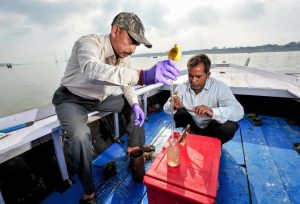
New Delhi: India’s Water Quality Raises Concern after fresh government data revealed that 1.82 per cent of drinking water samples tested across the country were found contaminated. West Bengal and Kerala reported particularly high numbers, raising questions about drinking water safety and regular monitoring.
According to the Jal Jeevan Mission’s Water Quality Management Information System (WQMIS), 45,16,442 water samples were tested in laboratories during the financial year 2026-27 as of November 21, 2026. Out of these, 82,180 samples were found contaminated.
This represents approximately 1.82 per cent of all tested samples. The findings show differences in water quality across states and highlight the importance of laboratory testing and corrective measures.
India’s Water Quality Raises Concern: 82,180 Samples Found Contaminated
The latest data from the Ministry of Jal Shakti shows that water contamination remains a concern in several parts of India. Although the national contamination rate is around 2 per cent, some states have reported much higher percentages.
The Jal Jeevan Mission monitors water quality through laboratories across the country. These laboratories test samples to identify contamination and help authorities take necessary corrective action.
However, these figures represent tested samples and do not mean that 2 per cent of Indian households receive contaminated drinking water.
India’s Water Quality Raises Concern in West Bengal and Kerala
West Bengal recorded the highest number of contaminated water samples among the states highlighted in the report.
Out of 1,12,816 samples tested in the state, 20,703 were found contaminated. This represents approximately 18.35 per cent of the total samples.
In simple terms, more than one out of every five tested samples in West Bengal failed to meet the required water quality standards.
Kerala ranked second in terms of contaminated sample numbers. Out of 2,10,353 samples tested, 19,558 were found contaminated. The contamination rate stood at approximately 9.30 per cent.
India’s Water Quality Raises Concern as Maharashtra Reports 14,449 Contaminated Samples
Maharashtra tested 3,81,367 samples, of which 14,449 were found contaminated. Corrective action was recorded in 9,193 cases.
Karnataka tested 2,02,968 samples, with 7,574 found contaminated. Haryana reported 4,752 contaminated samples out of 1,12,737 tested samples.
Rajasthan recorded 3,253 contaminated samples out of 33,041 tested samples. Uttar Pradesh reported 1,883 contaminated samples from 2,85,556 tests.
State-Wise Water Contamination Data
The following table highlights the number of tested and contaminated samples in selected states.
| State | Samples Tested | Contaminated Samples | Contamination Rate |
|---|---|---|---|
| West Bengal | 1,12,816 | 20,703 | 18.35% |
| Kerala | 2,10,353 | 19,558 | 9.30% |
| Maharashtra | 3,81,367 | 14,449 | 3.79% |
| Karnataka | 2,02,968 | 7,574 | 3.73% |
| Haryana | 1,12,737 | 4,752 | 4.21% |
| Sikkim | 4,962 | 3,666 | 73.88% |
| Rajasthan | 33,041 | 3,253 | 9.84% |
| Uttar Pradesh | 2,85,556 | 1,883 | 0.66% |
Sikkim recorded an especially high contamination rate of approximately 73.88 per cent based on the reported figures. Although its total number of tested samples was lower, the percentage deserves further attention.
India’s Water Quality Raises Concern: 2,882 Active Testing Laboratories
According to the reported Jal Jeevan Mission data, India has 2,882 active water quality testing laboratories.
These include 2,197 institutional laboratories and 685 laboratories located at water treatment plants. Among them, 1,751 laboratories have received accreditation from the National Accreditation Board for Testing and Calibration Laboratories (NABL).
These facilities play an important role in checking drinking water quality and identifying possible contamination.
Corrective Action Recorded in 26,576 Cases
The government data also highlights the corrective steps taken after contaminated samples were identified.
Across the country, remedial action was recorded in 26,576 cases. Maharashtra reported corrective action in 9,193 cases, while Karnataka recorded action in 7,078 cases.
Haryana reported corrective measures in 2,367 cases. Uttar Pradesh recorded action in 1,624 cases.
Authorities need to investigate affected sources and ensure that contamination problems are properly addressed.
What Is the Jal Jeevan Mission?
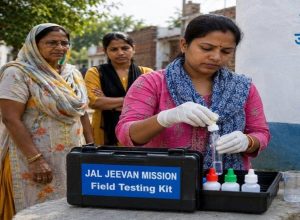
The Jal Jeevan Mission is a government initiative launched to provide safe and adequate tap water to rural households across India.
The programme focuses on improving access to drinking water and monitoring water quality. The Ministry of Jal Shakti uses its Water Quality Management Information System to track laboratory testing results and corrective action reported by states.
People can visit the official Jal Jeevan Mission website to access information about the programme and water quality monitoring.
Why India’s Water Quality Raises Concern for Public Health
Regular drinking water testing helps identify contamination and allows authorities to take timely action. Water sources, treatment facilities and distribution systems need proper monitoring to maintain safety standards.
State governments also need to improve laboratory facilities, investigate affected water sources and conduct follow-up testing wherever required.
Conclusion: India’s Water Quality Raises Concern
India’s Water Quality Raises Concern as government data shows that 82,180 out of more than 45 lakh tested water samples were contaminated as of November 21, 2026.
West Bengal and Kerala reported particularly high numbers, while Sikkim recorded a high contamination percentage among the selected states. The findings underline the importance of regular testing, better monitoring and timely corrective action to improve drinking water safety across India.
Official Sources
- Jal Jeevan Mission – Water Quality Management Information System
- Jal Jeevan Mission – Citizen Corner
- Official Jal Jeevan Mission Website