
Is Justice Only for the Rich? The Reality of Corruption in India
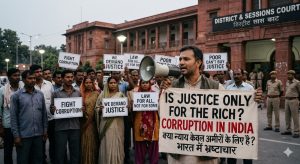
Is Justice Only for the Rich? The Reality of Corruption in India is not just a headline. It reflects a concern that people may have when they struggle to receive basic government services. Corruption and unequal access to justice can make citizens question whether everyone is truly treated equally.
Top 10 Departments Based on Public Experience Figures
The following figures were supplied for this article as public-experience percentages. The original survey source, year, sample size and methodology have not been independently verified. Therefore, they should not be treated as an official national corruption ranking.
| Rank | Department | Public Experience |
|---|---|---|
| 1 | Police | 72% |
| 2 | GST | 71% |
| 3 | Panchayat | 69% |
| 4 | Labour / PF | 69% |
| 5 | Sub-Registrar | 68% |
| 6 | RTO | 59% |
| 7 | Municipality | 57% |
| 8 | Income Tax | 47% |
| 9 | Electricity | 41% |
| 10 | Customs | 38% |
1. Police Department – 72%
The police department is one of the most important parts of the justice system. People approach the police when they face threats, theft, disputes or other problems.
However, some citizens complain about delays in registering complaints, lack of proper responses and pressure from influential people. These experiences can create fear and reduce public trust.
The question, Is Justice Only for the Rich? The Reality of Corruption in India, becomes especially important when an ordinary person approaches the police for help. Money and influence should never decide whose complaint receives attention.
Imagine a situation where a wealthy and influential person is involved in a dispute. The other person is poor and has limited resources. The poorer person may struggle to get attention or legal help, while the influential person may have access to people who can make the process easier for them.
This is an illustrative example, not an allegation against any particular officer. Every complaint deserves a fair and impartial response, regardless of a person’s financial position.
2. GST Department – 71%
Businesses depend on the GST system for registration, returns and other tax-related work. Small business owners may find complicated procedures difficult to understand.
When processes are unclear or communication is poor, people can feel helpless. Transparent procedures and timely support are important to prevent unnecessary difficulties.
Small business owners should receive the same clear information and assistance regardless of their financial position. A transparent system can reduce confusion and help people complete their work without unnecessary difficulty.
3. Panchayat – 69%
For people living in villages, the Panchayat is often the first point of contact for local government services. Residents may approach it for certificates, housing schemes, development work and welfare benefits.
If information is not shared properly or applications are delayed, ordinary families can suffer. Public records, clear eligibility rules and transparent decisions can help improve trust.
People from economically weaker families should not have to depend on personal connections to understand or access government schemes.
4. Labour and PF Department – 69%
Workers depend on labour-related offices and the Employees’ Provident Fund system for important services. Delays in claims, corrections or pension-related work can create financial stress for families.
Workers should be able to understand the status of their applications and receive clear information about the documents required.
5. Sub-Registrar Office – 68%
Property registration is an important process for families buying or selling land and houses. People may have to deal with paperwork, valuation and legal formalities.
When procedures are not transparent, citizens may feel that they need outside help to complete their work. Clear fee information and digital records can reduce confusion.
6. RTO – 59%
The Regional Transport Office provides services related to driving licences, vehicle registration and permits. These services affect students, workers, business owners and ordinary families.
Simple online processes, published fees and timely appointments can make the experience easier for everyone.
7. Municipality – 57%
Municipal offices handle important local services such as building permissions, property records, sanitation and other civic facilities.
When citizens cannot get clear answers about applications or service timelines, frustration grows. Local authorities need accessible complaint systems and transparent procedures.
8. Income Tax Department – 47%
Taxpayers expect clear guidance when filing returns, correcting details or responding to notices. Complicated communication can make the process difficult, especially for people who do not have professional assistance.
Easy-to-understand information and timely support can help taxpayers complete their work confidently.
9. Electricity Department – 41%
Electricity is an essential service for every household. People may contact the department for new connections, billing problems, meter issues or power interruptions.
Citizens should receive clear bills, proper complaint numbers and timely updates about service requests.
10. Customs Department – 38%
Customs procedures are important for international trade and the movement of goods. Importers and exporters need clear rules, consistent procedures and transparent communication.
When rules are difficult to understand, businesses may face unnecessary delays and additional costs.
Is Justice Only for the Rich? The Reality of Corruption in India: Rich vs Poor
One of the biggest concerns about corruption is the difference between the experiences of wealthy and poor citizens. This is where the debate about equal treatment becomes important.
A person with money may be able to hire a lawyer, consult an expert or take help from professionals who understand government procedures. Someone from a low-income family may not have the same options.
Consider a poor worker who is waiting for a payment or a family trying to resolve a property dispute. Repeated office visits can mean losing daily wages and spending money on travel. For a wealthy person, the same process may be easier to manage because they have more resources and support.
Is Justice Only for the Rich? The Reality of Corruption in India also highlights the difficulties faced by people who cannot afford expensive legal assistance. A fair system must give every citizen an equal opportunity to seek justice.
This does not mean every rich person gets special treatment or every poor person is denied justice. Honest officials work across government departments. But unequal access to resources can make the system feel unfair.
Justice should not have a price tag. Government services should not depend on how much money a citizen has in their pocket.
What Can Citizens Do About Corruption?
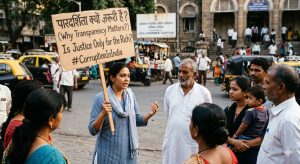
Citizens should know that official grievance and information systems are available. Depending on the issue, people can consider these options:
- CPGRAMS: Submit grievances related to central government departments through the official portal.
- Central Vigilance Commission: Visit the CVC website for information about vigilance matters within its jurisdiction.
- RTI: Use the RTI Online portal to request information from eligible central public authorities.
- Odisha Janasunani: Residents can use the Odisha Janasunani portal for state-level public grievances.
Citizens should keep copies of applications, receipts and complaint numbers. Any allegation should be supported by evidence and reported through the appropriate official channel.
Why Transparency Matters
Corruption cannot be addressed by blaming an entire department or every government employee. The focus should be on improving systems, making procedures transparent and ensuring accountability.
Government offices should publish service fees, application timelines and the names of responsible authorities. Digital tracking systems can help citizens understand where their applications stand.
Most importantly, complaints should be investigated fairly. A citizen’s income, social position or personal connections should never decide whether their complaint receives attention.
Is Justice Only for the Rich? The Reality of Corruption in India: Final Thoughts
India’s justice system is built on the principle of equality before the law. However, when citizens feel that money and influence can make government work easier, public confidence suffers.
The figures presented in this article raise questions about public experiences, but they should be read with the limitation that their original source and methodology have not been verified.
Is Justice Only for the Rich? The Reality of Corruption in India is a question that deserves public discussion. Real change requires transparent administration, responsible officials, accessible legal support and equal treatment for every citizen.
Because justice should be available to everyone, not only to those who can afford it.
Stay Connected with DeshPrism
What is your experience with government offices? Do you think ordinary citizens receive equal treatment? Share your views respectfully in the comments.
For more updates on India, Odisha, public issues and important developments, stay connected with DeshPrism.
Related Articles
- Odisha Police Recruitment 2026
- Odisha Pension Portal: New Benefits
- Odisha Janasunani: Public Grievance Updates
Sources and Useful Official Links
- Central Public Grievance Redress and Monitoring System
- Central Vigilance Commission
- RTI Online
- Odisha Janasunani
Editorial note: The department-wise percentages in this article were supplied as public-experience figures. DeshPrism has not independently verified the original survey, sample size, date or methodology. They are not presented as official government statistics.